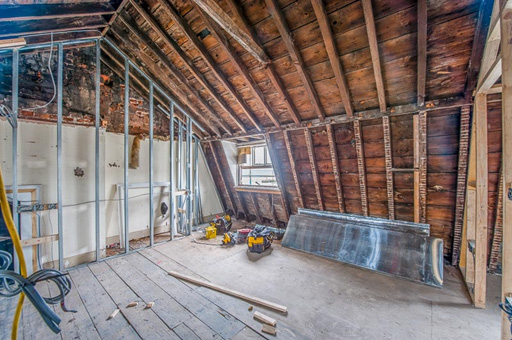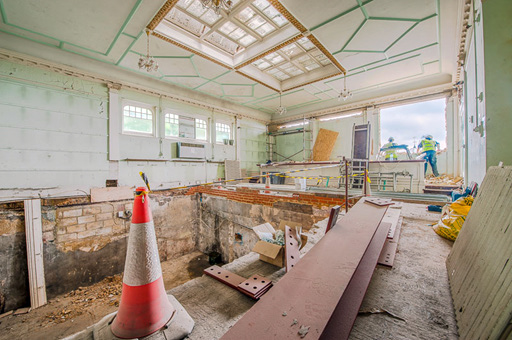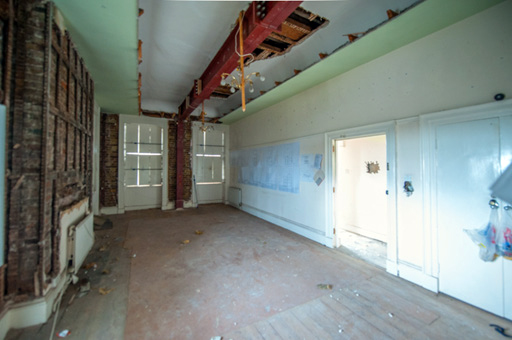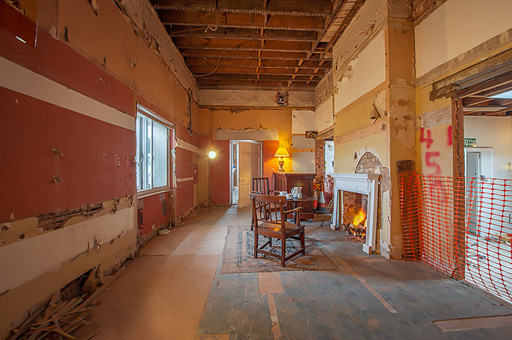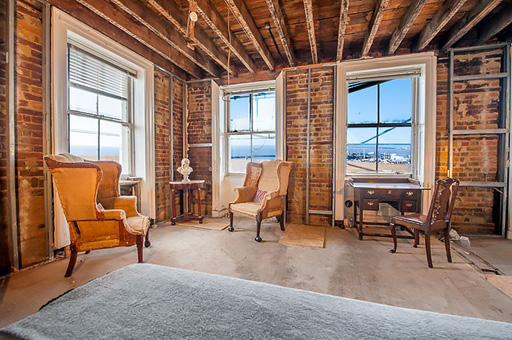

Built in 1791, The House is beautifully situated on the edge of the East Cliff, offering lovely views overlooking the harbour and the English Channel.

History of The House at Ramsgate
Albion PLACE story
The land for Albion Place was purchased by Stephen Heritage from Robert Smith, a carpenter, in March 1789. Stephen Heritage laid out the land for the construction of Albion Place and its roads, with building plots for resale. The building plots were then sold on to a group of 20 people in March 1791. James Simmons, the original owner of Albion Place, was not among this list of purchasers, so he must have bought the house or the land in order to build the house from one of these 20 people.
The deeds stipulated that the houses were all to be built in a similar manner and were to be completed within two years. This means Albion Place was built in 1791/2 by James Simmons, alderman and entrepreneur of Canterbury. It appears that it was purchased as an investment by Simmons, as there is no sign that he ever lived anywhere else other than Canterbury. He was an influential figure in the city, improving Canterbury’s pavements, lighting, the Buttermarket and Dane John Gardens.
Simmons was from a fairly humble background. He was born in Canterbury in 1741 to a peruke maker and attended King’s School before serving an apprenticeship in London as a stationer. He founded the Kentish Gazette, which is still in existence today, and invested in a number of projects, such as a mill and the creation of the Canterbury Bank, which was to eventually merge with Lloyds. He was a sitting MP for Canterbury when he died in 1807. Albion Place was sold by Simmons’ executor to the 3rd Duke of Portland, a man renowned for twice being prime minister and after whom we have named the cocktail the twinkling two timer in our bar! Following the Duke of Portland’s death, a couple of years later, the house was put up for auction in 1810. At this point, Mary Townley purchased the property.
The elegant marine mansion of Albion Place
3rd march 1791
The elegant marine mansion of Albion Place, built by the late James Simmons sold by his executor to the late Duke of Portland sold at auction on Tuesday with a piece of garden ground at the back of Albion Place sold to Mrs Townley for £3970 (the house for £3300 and the garden for £670).
Mary Townley’s husband, James, was one of the original purchasers of some of the plots in Albion Place. James Townley had gone on to purchase the green in front of Albion Place in 1803. Mary Townley, nee Gostling, was one of England’s earliest female architects. She came from a well-established family in Twickenham. Her designs in Ramsgate included barracks, which were later turned into houses, the development of Albion Place, townhouses that became the Regency Hotel and Townley House, which is on Chatham Street in Ramsgate.
In March 1834, the property was let for three months to the Earl and Countess of Munster. The Earl was the eldest natural son of King William IV by his mistress (scandal!). It was Townley’s prominent role in local society, arranging balls at Townley House and entertaining the nobility, that led to the Duchess of Kent and her daughter, Princess Victoria, later Queen Victoria, staying at Albion Place for several months in 1835.
It was whilst in Ramsgate that Princess Victoria caught a severe fever. She left Ramsgate in January 1836. It was here that Sir John Conroy tried to convince Princess Victoria to give him wide-ranging powers as her private secretary when she became Queen. Records show him to be a punitive guide in Victoria’s upbringing, implementing the Kensington system, which saw her study many hours of the day and deny her an enjoyable youth. When the Queen was in a position to do so, she rid herself of Sir John Conroy.
Mary Townley owned Albion Place until her death in 1839. At this point, the property was put up for sale at auction along with a number of other properties owned by the Townley family.
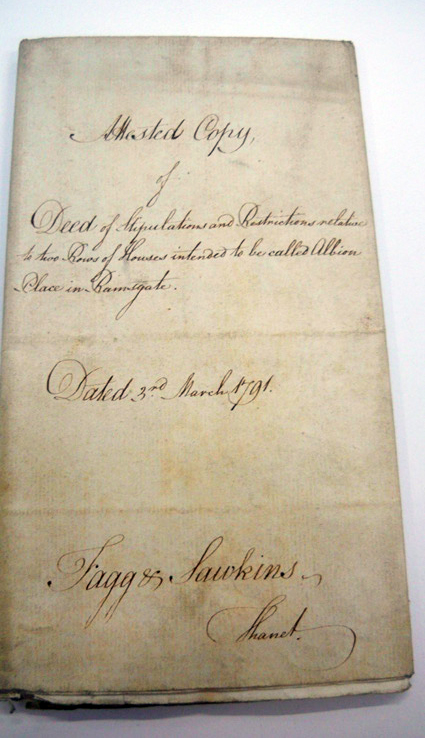
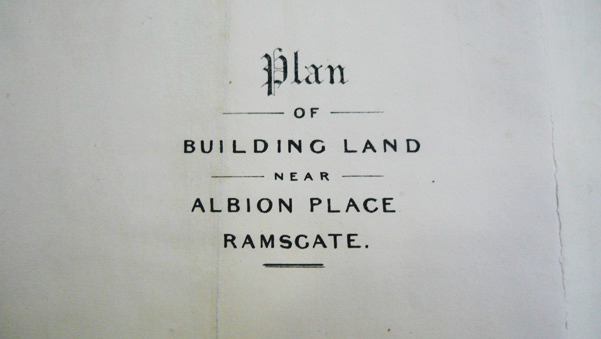
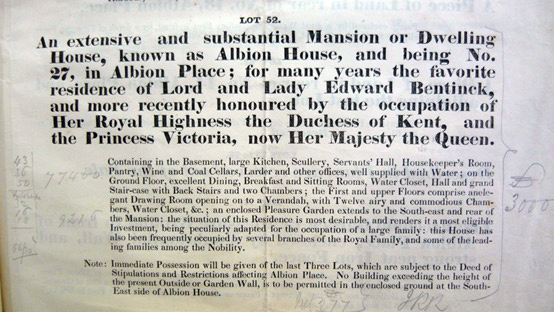
Lot 52 from the sales particulars shows the position of Albion House and gives a description of the number and type of rooms in the building. The house continued to be let as a holiday home to members of the gentry. In 1838, the Duke of Newcastle stayed there for the season.
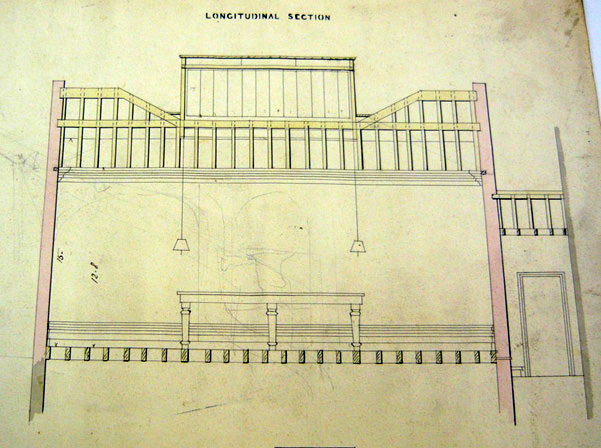
The house was still being advertised to let in 1850, but after this time, it appears that there was a change of use to a men’s social club. There are plans of a billiard room originally dated March 1837 with accompanying description as to the works to be carried out, but they do not appear to have been signed off until 1851. There is no mention of it in the sales particulars of 1839, so it seems the plans were drawn up but not acted on until after its sale. It is described as Albion Club House, Albion Place.
It seems that after Mary Townley’s death, Ramsgate became a less fashionable resort to stay in for the aristocracy and gentry. The house may then have struggled to be let as a family residence, and for this reason, it became used as a gentleman’s club before becoming a lodging house.
Albion House was certainly a lodging house by at least 1857, when George Potter, a substantial farmer, was at the property. He is recorded at the property in the 1861 census as a Lodging House Keeper. Staying there at the time was Anne Latham, a fundholder born in the East Indies. She was visiting with her daughter and granddaughter, who were also born in the East Indies. In 1871, George Potter was still at Albion House, where it was now described as a boarding house. A number of the guests at that time were solicitors.
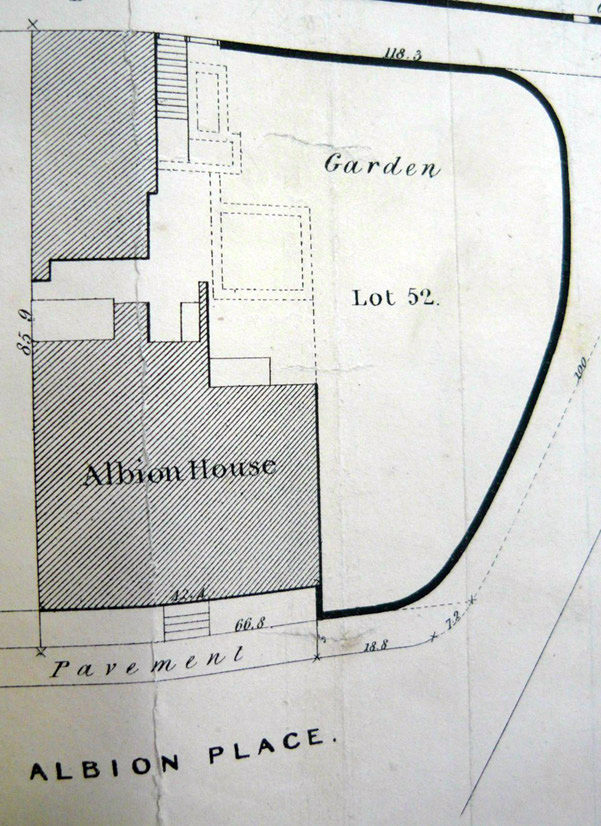
In 1881, the Boarding House Proprietor was Charles Wilkinson. Ten years later, the house no longer seemed to be in use as a boarding house and was put up for sale in August 1892. The house was finally sold in 1900 by Montague Kingsford, a solicitor, to the Ramsgate Council, who used it as its offices until 1974, when it transferred to the ownership of Thanet Council.
British Restaurant tickets were found in the building during the refurbishment, and these date to WW2, providing ‘off the ration’ meals to anyone, with the equipment provided by the Ministry of Food. ‘Communal Feeding Centres’ had first been established during the Blitz in the autumn of 1940. Due to a suggestion by Winston Churchill, the name was later changed to British Restaurants. These were to help people bombed out or who had run out of ration coupons to have a wholesome, inexpensive meal. They were disbanded in 1947.
Ramsgate was heavily bombed during the Second World War, and it is astonishing that Albion House was not damaged more significantly. Much of the square in which it sits was hit directly. The evidence of this can be seen from the two carparks on Albion Place, which would have been approximately 6 Georgian terraced houses.
In the space of 24 hours on and around 24th August 1940, 500 bombs were dropped on Ramsgate when enemy air fighters were returning to base in France following a bombing mission in London. The only saviour for many of the local residents was the extensive networks of tunnels below Ramsgate, a visitor attraction you can visit today.